Age Concern Tyneside South (ACTS) don’t just work with older people – their mantra is to ask What Matters To You, whatever your age, and to build support around the answer. Whether that’s men at risk of suicide, people moving between hospital and home, or older residents needing practical help, ACTS uses SIGNAL’s Life Map approach to make that conversation real. Monica, a member of ACTS’ Connected Caring Team, shares what that looked like for Natasha, a young woman she’s supported over the past year.
A carer long before she was ready
Natasha was referred to Monica from Young Carers – a natural next step as she grew into more adult responsibilities: benefits, employment, and increasingly, the financial and housing needs of her whole family. The household was already under strain, and things grew harder still after her mum’s PIP – and with-it Natasha’s carer’s allowance – was withdrawn, her mum having been deemed to have made a sufficient recovery following a stroke.
On paper, Natasha is NEET – not in employment, education or training. In practice, she has been an unpaid carer for at least ten years, for her mum and her 12-year-old sister, taking on school runs, meals, and the day-to-day running of a household. Nearly half her life has been organised around caring for others.
Monica’s concern wasn’t that Natasha lacked commitment – it was the opposite. “She’s been so consumed by the caring role, for so long, that it can feel permanent,” Monica explains, “but her situation is anything but stable.” Natasha was moving from the relative support of Young Carers into the harder edges of adult systems: managing benefits, contesting DWP decisions, coping with a home that couldn’t accommodate her mum’s limited mobility.
Building agency, not doing it for her
Monica’s aim throughout has been to help Natasha build resilience and agency of her own, rather than stepping in to solve things on her behalf. That’s not always straightforward. Monica describes arranging a carer’s assessment meeting, which Natasha then cancelled – even with Monica offering to go along. “Carers can experience those meetings as a judgement on their caring, rather than support,” Monica reflects, seeing in it something of Natasha’s wider habit of not always seeing things through – itself a mark of how much she has had to carry alone.
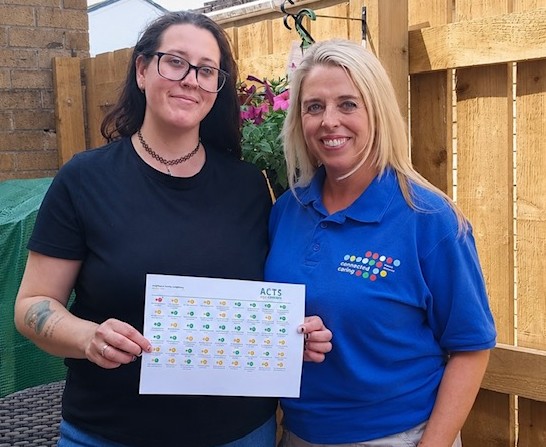
Natasha and Monica
The first Life Map became a turning point: a way for Natasha to join the dots between her caring role, her finances, and her own wellbeing.
“Completing the Life Map helped her to recognise her resilience and strengths, while creating clear actions to address ongoing challenges.” – Monica
First Life Map
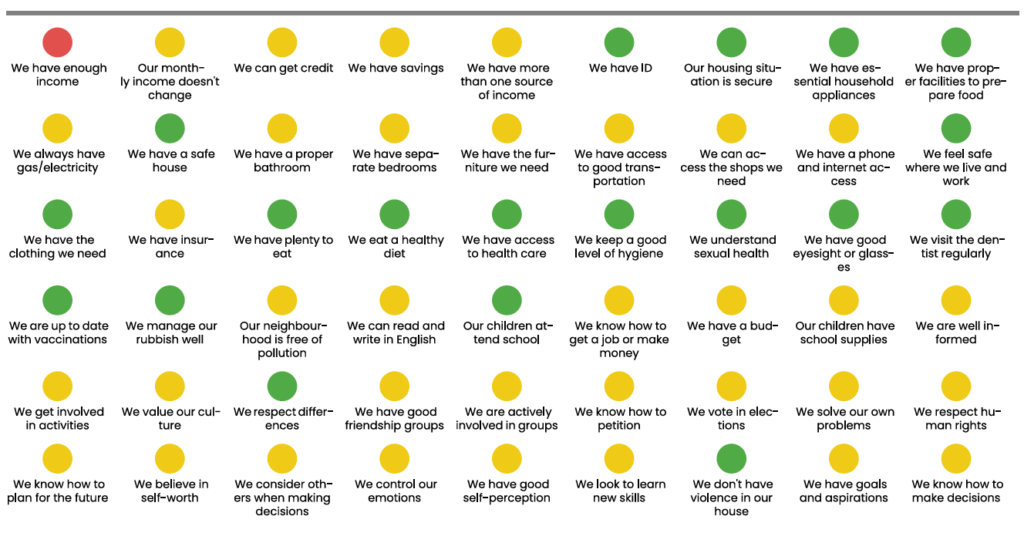
Natasha prioritised Income and Entertainment & Recreation – small in scope, perhaps, but significant in what they revealed: that not having enough to do the things she enjoyed was affecting her health and wellbeing, and that this mattered as much as anything else on her plate.
Eleven months on
At first glance, Natasha’s second Life Map looked like no progress had been made against those same priorities. Monica reads it differently.
“We have developed a trusting relationship, and she now feels comfortable reaching out for support when she needs it. Her second Life Map showed her that many other areas have improved, and she has a much more positive outlook.” – Monica
Second Life Map
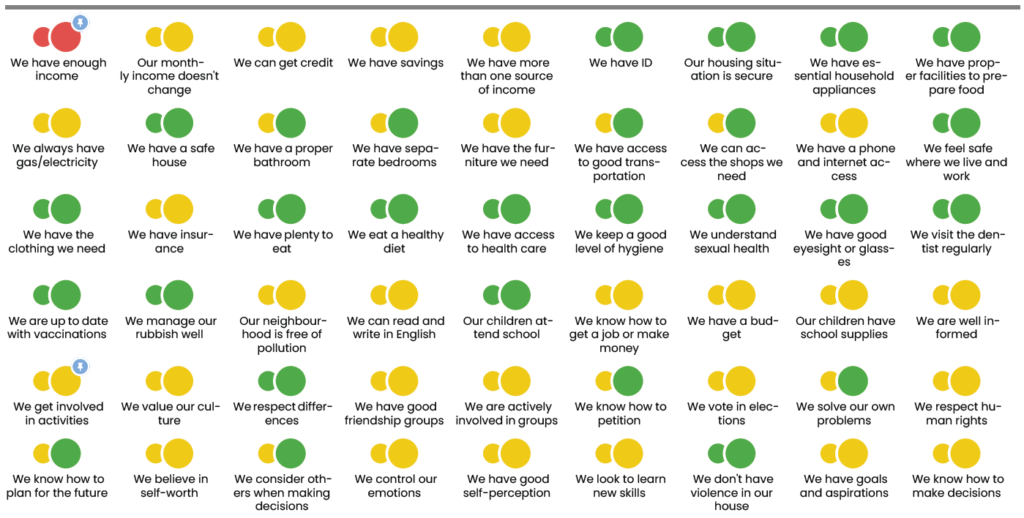
New greens appeared: “we know how to plan for the future,” “we solve our own problems.” But her biggest achievement was something she decided to do entirely herself: finding a new place to live, project-managing the move, and successfully settling her family into a home that could accommodate her mum’s mobility needs. “We have a proper bathroom” and “we have separate bedrooms” are now green on her Life Map too. Even Monica was surprised at how proactive and determined Natasha had been, and how she’d managed the whole process on her own.
It’s a small story in one sense – a change of address. But it’s evidence of exactly what a “What Matters to You?” approach is meant to unlock: someone moving from coping with a situation to actively shaping it, on her own terms.
“We support many unpaid carers who accept their situation and assume nothing can be done about it, or who simply don’t know where to start. Our role is to say – you can do something about it, and here’s where you can begin.” – Susan Wicks, Deputy CEO, ACTS
What this makes visible for the system
Supporting unpaid carers sits at the heart of ACTS’ work, aligned to South Tyneside’s Carers’ Strategy 2022–2027 – in particular its ambition to increase access to stable, supportive employment, an ambition ACTS also backs through its commitment to the ST Pledge to recruit locally and open up employment routes for carers.
As Susan Wicks puts it, the strategy and the Pledge have named the problem and are looking for answers – but the Regional Trailblazer Fund still needs good, evidenced examples to persuade employers to become genuinely carer-friendly. That’s where stories like Natasha’s carry weight beyond the individual: the process of completing a Life Map captures the depth of someone’s journey, and with it, evidence of transferable skills an employer would recognise anywhere – project management, time management, follow-through, and a demonstrable growth in agency and resilience over time.
“From an employer’s point of view, the story becomes: see what she’s offering – not, what do I have to do to accommodate her needs?” – Susan Wicks, Deputy CEO, ACTS
Natasha’s journey is still unfolding, and it isn’t finished. But it already shows what becomes possible when a system asks what matters to someone, listens to the answer twice over a year, and lets that shape what comes next – for her, and potentially for how employers think about carers more widely.