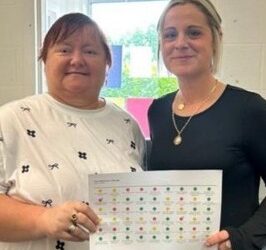
Maureen Allan on what public services can miss when people’s lives are treated in silos.
By Andy Cox · 3–4 minute read
Featuring Maureen Allan, Chief Officer, Volunteer Centre East Lothian. Based on an interview with Maureen.

When I spoke with Maureen Allan about what Volunteer Centre East Lothian is learning through Life Maps, one observation captured the challenge particularly clearly:
“People live horizontally. Systems operate vertically.”
Our lives do not divide neatly into housing, health, money, transport, work or social care, yet services, funding and data are often organised in precisely those categories. The result is that public services can understand one part of a person’s experience while missing how different pressures interact across their life.
That is one of the things Life Maps are beginning to make visible in East Lothian.
Transport is rarely just transport
Maureen gives the example of transport. On the surface, it can look like a straightforward question about buses or getting from A to B. In practice, it can determine whether someone gets to a health appointment, stays connected to other people, participates in community life, maintains confidence or continues to live independently.
Transport → health → community → confidence → independence
The transport problem is real, but it is rarely the whole story. Starting with What matters to you? can create the space for those connections to emerge, including things that conventional service data may not capture at all.
In East Lothian, more than 100 unpaid carers became visible through these whole-life conversations. They had not suddenly become carers; people were simply being given the opportunity to describe what was actually happening in their lives.
From individual stories to shared patterns
One conversation can help a person and a practitioner understand a life differently. Hundreds of conversations can begin to reveal recurring patterns.
Across around 400 Life Maps in East Lothian, VCEL is starting to see patterns in the pressures people experience, what they choose to prioritise and how different parts of life connect. But the data does not explain everything on its own. The same indicator can mean very different things to different people. Transport may mean access to work for one person, a hospital appointment for another, or simply the ability to stay socially connected.
That is why the story and the data need to stay together. Data can show that a pattern exists; lived experience helps us understand what that pattern means.
What might systems be missing?
This matters because poverty itself is rarely experienced in neat categories. Housing can affect confidence. Caring responsibilities can affect employment and income. Isolation can affect health. Transport can cut across all of them.
The point is not to abandon specialist services or specialist data. It is to recognise that a service organised around one issue may only ever see part of the picture. Whole-life insight can add another layer by asking what else is connected and what matters most to the person.
That may sound simple, but it has implications for how public services think about prevention. If the pressures shaping someone’s life are interconnected, then responding to one issue in isolation may not be enough. Equally, the place where a person chooses to begin may not be the place the system assumes is most important.
From being heard to having influence
Maureen’s interview also raises a harder question. It is one thing for lived experience to be heard; it is another for it to influence what organisations actually do.
VCEL can help bring insight from Life Maps, community organisations, staff and volunteers into strategic conversations about poverty, prevention, health inequalities and local services. The real test, though, is what happens after that insight reaches the room.
Do different questions get asked? Do plans, services or investment change? And can people see what happened because they spoke?
That is where Shared Insight needs to go next. We are not simply trying to collect more stories, or assuming that a dashboard can tell decision-makers what to do. The aim is to bring lived experience, patterns in the data and practice knowledge together in a way that helps systems notice connections they may otherwise miss.
Perhaps the starting question for public services should therefore be less “What problem does this person have?” and more “What matters to them, and what else is connected to it?”
That is what we are noticing now.
Read more
This reflection draws on my full interview with Maureen Allan about Volunteer Centre East Lothian’s use of Life Maps and the role of the third sector in carrying lived-experience insight into strategic decision-making.