What working alongside people facing complex multiple needs can teach us about where support should begin
By Andy Cox · 3–4 minute read
Featuring Mark Joyce, Changing Futures Northumbria. Based on a conversation with Mark.
When I spoke with Mark Joyce about the work of Changing Futures Northumbria, one idea kept returning: people facing complex multiple needs do not experience their lives in the same categories that services use to organise support.
Housing, mental health, substance use, money, relationships, safety, confidence and isolation can all be part of one lived reality. Yet support may be organised through different teams, assessments, thresholds and plans. From inside each service those arrangements can make sense. From the person’s point of view, they can feel fragmented.
That raises a more difficult question about the language of complexity itself. When we describe someone as having “complex multiple needs”, are we describing the complexity of their life — or partly the complexity of the system around them?
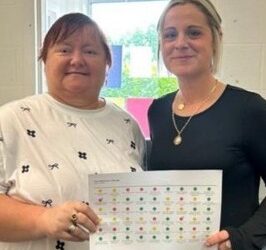
Changing Futures Northumbria used a version of the Life Map designed specifically for people experiencing complex multiple needs. Rather than beginning only with the problems services could see, the conversation looked across the whole of someone’s life and asked what mattered to them.
That does not mean ignoring serious risk, urgent need or professional judgement. It means adding another perspective: the person’s own understanding of what is connected, what matters most and where they feel able to begin.
For Mark, that matters because the area of greatest visible pressure is not always the place where someone chooses to start. A practitioner may understandably see one issue as the most urgent, while the person may identify another as the place where change feels possible. Those perspectives do not have to compete. Bringing them together can create a better understanding of both risk and possibility.
The Life Map also helps make those connections visible in a structured way. Instead of producing another list of separate problems, it can show how pressures interact across a life and what the person themselves chooses to prioritise. Follow-up Life Maps then allow us to see what changes over time — not only in individual circumstances, but also in agency: whether someone feels increasingly able to make choices, act and shape what happens next.
This is where the individual conversation begins to become something more useful for the wider system. Across many Life Maps, we can ask whether the same pressures repeatedly appear together, whether people tend to choose different starting points from those services might expect, and what happens elsewhere in someone’s life when progress is made.
That does not turn lived experience into a simple formula for service design, and it does not prove that one intervention caused every change. What it does is provide another layer of evidence — alongside professional judgement, service data and wider economic evidence — about how people actually experience complex multiple needs and where they believe progress can begin.
Mark’s perspective therefore has relevance beyond Changing Futures itself. The question is not whether specialist services are needed; people facing complex multiple needs may require highly skilled and specialist support. The question is how those services organise themselves around one person and one connected life.
If each service sees only the issue it is responsible for, the person is left carrying the connections between them. If those connections can be made visible, then the system has a better chance of understanding not only what is wrong, but what matters and where change may be possible.
That is the point at which lived experience starts to become system intelligence.
When someone has complex multiple needs, does the response have to be complex too?
That is what we are noticing now.
Read more
This reflection draws on my conversation with Mark Joyce, Changing Futures Northumbria, and the original SIGNAL story exploring what can happen when support begins with what matters to the person.
Read the full story: Start with what matters, not what’s wrong →