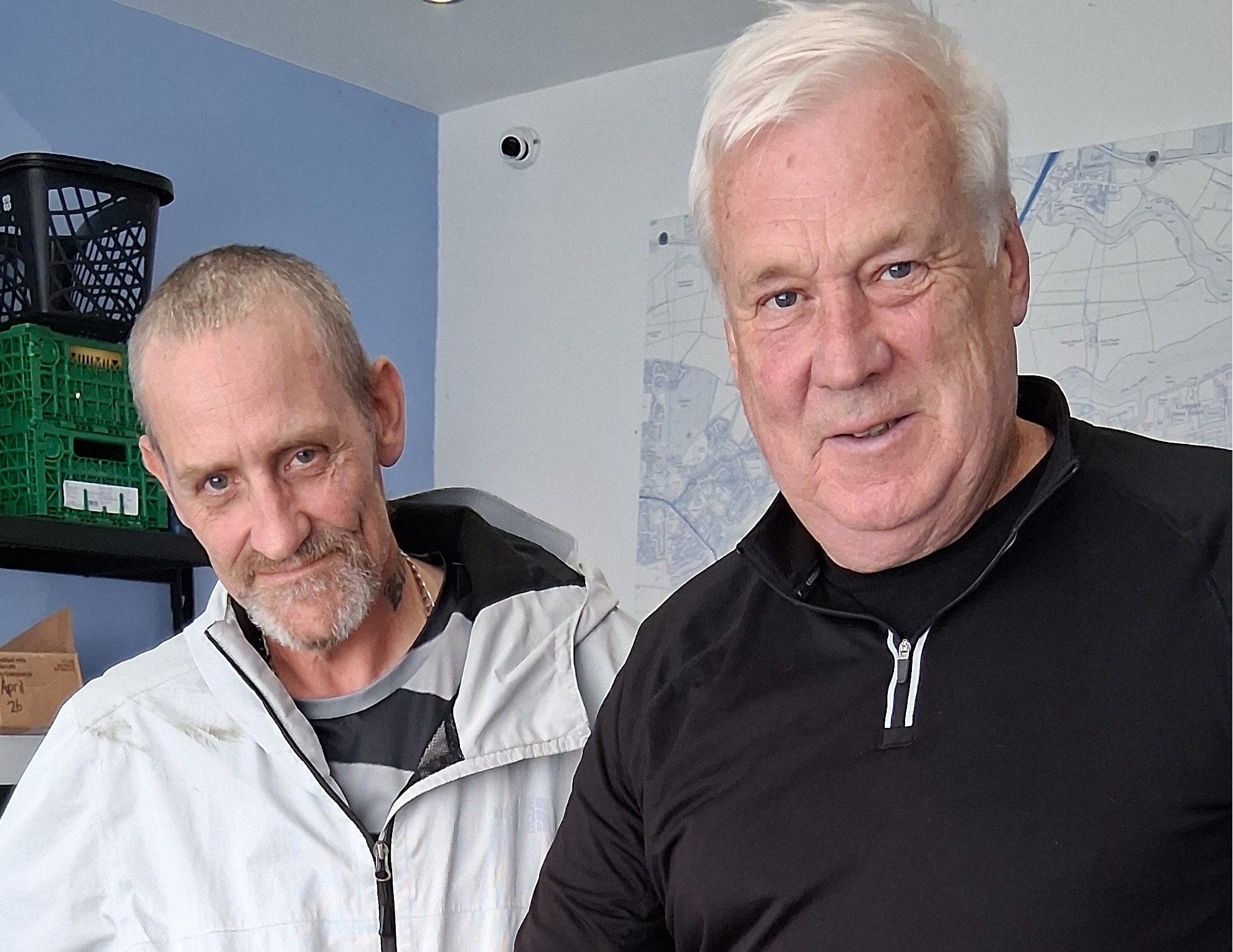
Sum Body arrived at Blyth Food Bank carrying more hardship than was visible from the outside. His wife had died eighteen months earlier. His home of six years was uninhabitable – overrun with mould that had destroyed his furniture and made the place unliveable. He was grieving, socially isolated, and struggling with thoughts of suicide. He was also, simply, hungry.
He felt embarrassed to be there. He is a proud man.
But Sum had survived worse. Twenty years earlier, working for a temp agency in Wales, he had been recycling propane bottles when the store blew up. He was left with third-degree burns and spent months in hospital on life support. With no close family and a father, he wanted nothing to do with, he made a decision during his recovery: he would start again. He chose a new name – Sum Body – and built a new life.
That new life had brought him love, a marriage, a home in Bedlington.
“I no longer felt lost. I felt I had a purpose.” Sum Body
Then he lost her.
What the Life Map helped make visible
When Martin, a trustee and volunteer team leader at the food bank, struck up a conversation with Sum, it opened a door to something more than food.
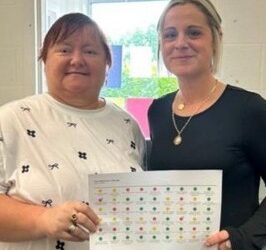
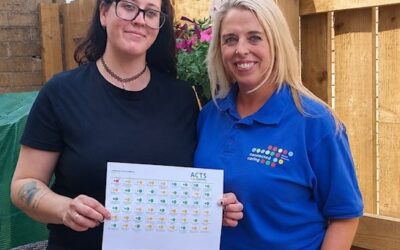
Martin introduced Sum to SIGNAL and its Life Map process. A Life Map is SIGNAL’s guided self-assessment. It helps people reflect on different areas of their life, identify what matters most to them, and choose priorities for action.
Sum’s first Life Map made visible what the presenting crisis alone couldn’t show. Financially, he was in crisis – no money, no food, no proper facilities to cook. But the Life Map also helped surface things that are often harder to name: feeling socially cut off, not knowing how to make decisions, having no sense of what he wanted next.
First Life Map
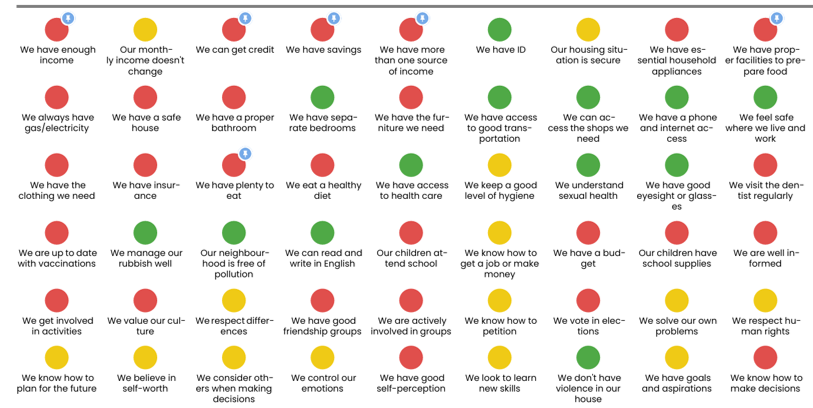
Seeing his lived experience laid out clearly, in his own terms, helped in a way Sum hadn’t expected.
“It’s good to hear yourself explain what’s going on. You can’t sort it unless you talk to someone. My Life Map broke things down into manageable chunks. For the first time in ages, I could start to think about what I wanted and how to get there. I no longer felt lost; I felt I had a purpose.”
What Sum and Martin made of it together
With Martin’s support, Sum set clear priorities. The most important: get a job.
That sounds simple. But Sum hadn’t worked in twenty years – not since the explosion. He had no recent references. He needed to rebuild confidence before he could rebuild a working life.
The Life Map helped him think practically about what needed to happen first. He went to Citizens Advice about his housing situation. The council, prompted by that advice, finally fixed the mould. His home became liveable again.
He started attending job interviews. His agency – his sense that he could make decisions and act on them – began to return.
Then he secured his first job in twenty years: as a bus driver for a local company.
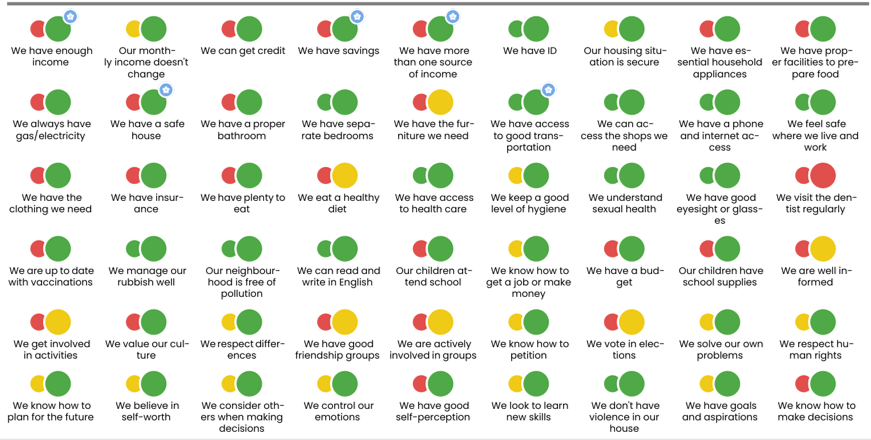
When Sum completed his second Life Map, the difference was striking. Improvements showed across every area: finances, housing, health and wellbeing, social connections – and agency. Sum now describes himself as someone who makes his own decisions, knows how to move towards his goals, and no longer feels at the mercy of circumstances.
Second Life Map
Why this matters
Sum’s story reflects something the Life Map process often makes visible: the most visible crisis is rarely the only one.
He came in hungry. But behind that were grief, material insecurity, a collapsing home, and a complete loss of direction. A food parcel would have reached one of those things.
The conversation – and the structure the Life Map gave to that conversation – helped with all of them. This is what it looks like when lived experience is taken seriously, not just as need to be met, but as insight to be understood.
Blyth Food Bank’s evolution into something closer to a community hub is visible in how Sum was met: not as a problem to be solved, but as a person with priorities, dignity, and the capacity to shape his own life when given the right space to do so.
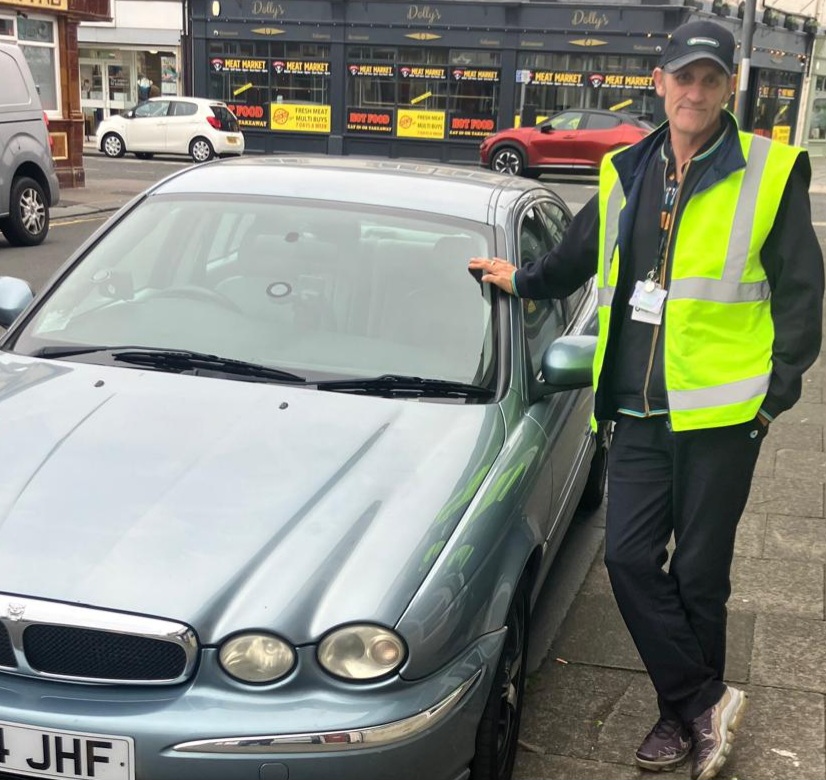
“I don’t know where I would have been without the food bank.”
What this points to next
Sum’s two Life Maps – the first showing the depth of difficulty, the second showing the scale of change – offer something useful beyond his individual story.
They show what becomes possible when a place of emergency support also creates space for practical change: for a person to reflect, name what matters to them, set priorities, and act. They also raise a question worth sitting with: how many people arrive at food banks carrying hardship that a food parcel alone cannot reach?
That is the kind of question SIGNAL’s shared insight exists to help answer.