Building Connections and Confidence in Barking & Dagenham: How SIGNAL is Tackling Social Isolation
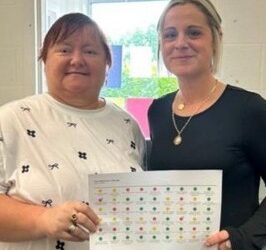
In Barking and Dagenham, the Connect programme is taking a fresh, innovative approach to the complex challenge of social isolation. By bringing together local residents, the Voluntary, Community and Social Enterprise (VCSE) sector, and the local authority, Connect is creating the conditions for meaningful relationships and stronger communities to grow.
A central part of this work is a commitment to learning, experimentation, and collaboration—an approach championed by Dr Michael Roberts, Design Researcher at Care City, who has helped shape the programme.
“In Connect, we’re doing things differently,” says Dr Roberts. “We’re working across sectors and with residents to develop a shared vision of a connected borough. That means trying new things, learning as we go, and really listening to people’s lived experience.”
A key part of this approach is SIGNAL—a structured tool that helps people reflect on what matters most in their lives. Through a guided conversation and a visual Lifemap, residents explore core areas of wellbeing and begin to take practical steps toward greater connection, control, and confidence.
The Role of the Facilitator: Abs at Harmony House
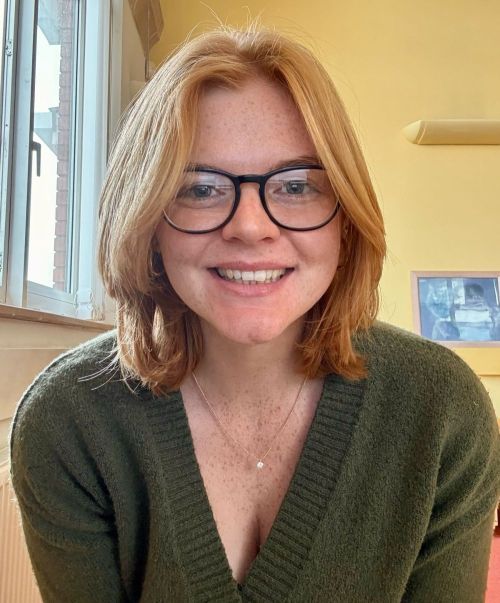
Abigail Thomas—known as Abs—works as a Connections Catalyst at Harmony House, one of the Connect partners. She supports residents using the SIGNAL methodology, guiding them through reflective conversations that help them identify their priorities and take action.
“SIGNAL gives structure to a conversation,” Abs explains. “It helps people focus on what truly matters to them. I’ve seen people go from feeling stuck and alone to making hopeful plans for their lives.”
Delfa’s Story: Rebuilding Life After Loss
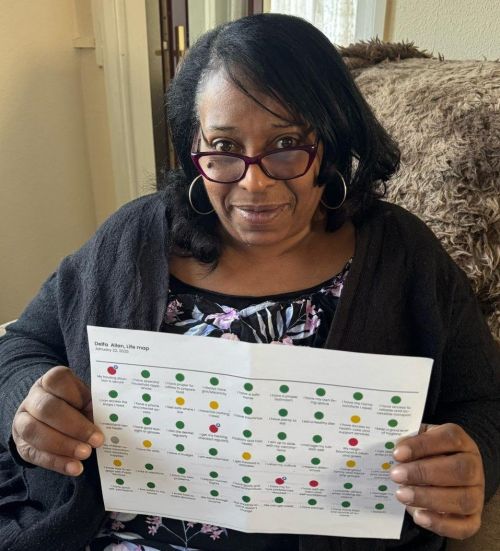
After losing her partner and facing multiple long-term health conditions, Delfa found herself living alone with no nearby family and few social connections. She was referred into the Connect programme for support in rebuilding confidence and reconnecting with others.
Through her SIGNAL Lifemap, created with Abs, she was able to visualise her life and make sense of her current situation.
“It gave me structure and made me feel more positive,” says Delfa. “It was also a great ice-breaker with Abs. By talking things through, I could explore different aspects of my life and make decisions for myself.”
One of her top priorities was addressing her hearing loss, which was making it harder to rejoin social spaces. She booked a hearing test and began using her Lifemap as a source of daily encouragement.
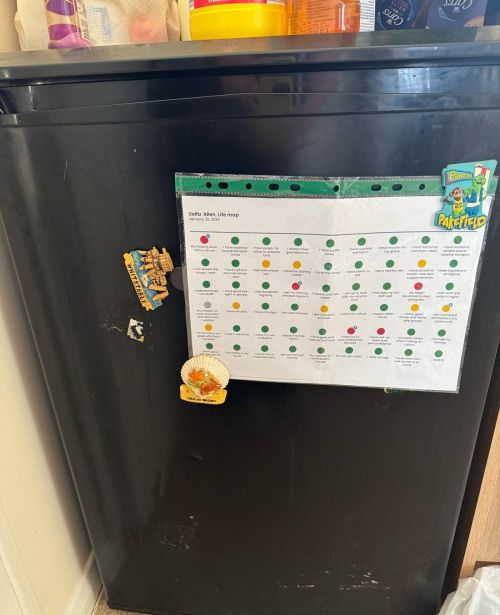
“I put it on my fridge for inspiration.
I add stickers for goals and stars when I reach them.
It’s like an extra appliance in my life!”
Jeanette’s Journey: Thinking Ahead, Taking Control
Jeanette had been housebound following a foot injury and hadn’t worked for over 20 years due to a previous accident. When she met Abs, she felt isolated and unsure how to plan for the future.
Her SIGNAL Lifemap helped her see her life more clearly. One section—focused on future preferences—opened up a conversation about planning ahead for later life, including matters she hadn’t previously felt ready to confront. This helped her reflect on how her needs and wishes could be better respected, and where she might need support to ensure that happened.
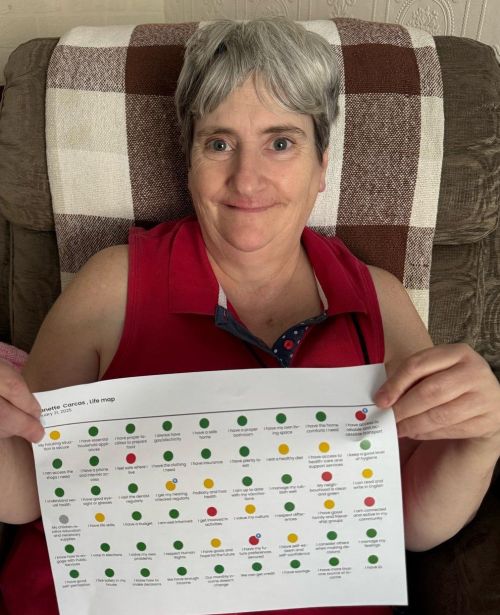
“It’s not about ticking boxes,” says Abs. “SIGNAL gave us the space for a real conversation. You could see something shift—Jeanette began thinking about what she wanted, not just what others expected.”
Through this process, Jeanette recognised the importance of setting healthy boundaries and identifying trusted individuals who could support her. It gave her the clarity and confidence to make some important decisions and begin re-engaging with her community.
“I was surprised how much the Lifemap helped me,” she reflects. “It made me think about things I’d brushed under the carpet. It really opened my eyes to what’s going on and what I want to change.”
A Two-Way Transformation
For Abs, supporting residents through SIGNAL has been as transformative for her as it has for them.
“I started this role with nothing but eagerness and hope. I’m so thankful Harmony House saw me for who I am and gave me this opportunity,” she says. “This work is life-changing—not just for the people I support, but for me too.”
She adds:
“I want to show my son that it’s possible to have a job that brings joy and purpose. Every day, I see how important community is, and I’m proud to be part of something that makes a difference.”
From Isolation to Agency
The Connect programme’s use of SIGNAL is demonstrating what’s possible when structured reflection meets deep listening and trusted relationships. As Dr Michael Roberts explains:
“We start by asking, ‘What matters to you?’ From there, people begin to take real, meaningful steps—toward connection, clarity, and control. That’s the power of this approach.”
In Barking and Dagenham, SIGNAL is helping to shift the focus—from services doing for people, to people taking the lead in their own lives, with the right support. And in doing so, it’s not just tackling social isolation—it’s nurturing agency, hope, and community.